#OneTrustOneTeam
Click on the photos below to read our stories
This site uses cookies. By continuing to browse the site you are agreeing to our use of cookies. Find out more here. Hide this message
You are here: Home > News and media > #OneTrustOneTeam
Click on the photos below to read our stories
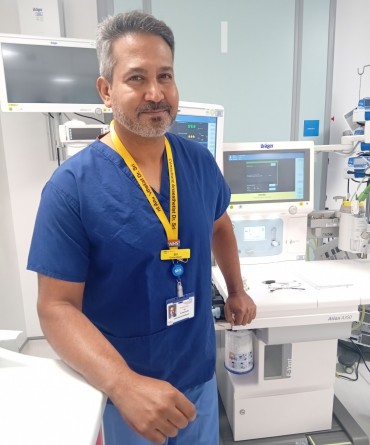


Say hello to Dr Srivatsa Sambamurthy, Consultant Anaesthetist and Lead for Obstetric Anaesthesia.
I am a consultant anaesthetist, with a special interest in obstetric anaesthesia, which is the specialist area of anaesthesia that supports women during pregnancy and childbirth. As a consultant, I manage anaesthesia for my patients before and after their surgery and monitor them during their procedures. As part of my role, I have also introduced a new obstetric clinic for maternity patients who are at high risk during births. I am also an appraiser of other doctors, and I support and guide doctors in training, who are our future health care professionals.
I have been at the Trust for three years now, after working internationally as an anaesthetist in places such as India and Oman. I then joined the NHS and really enjoy working at Scarborough Hospital. What I like most is that I have a friendly and approachable group of colleagues.
Away from my day-to-day work, I am very involved with Scarborough Hospital Cricket Club, and I play for them every year.
Working with people every day feels special: I am blessed with lovely colleagues at work who are approachable at all times. I get excellent support from my managers and anaesthetic secretaries, which helps make challenges of work easier.
The work we do is high-pressure and demanding, so I would recommend that everyone always asks for support if they need it. I also think that the Trust values of openness, kindness and excellence are very important, and I try to live these values in my work every day. They are also an excellent guide for new colleagues!
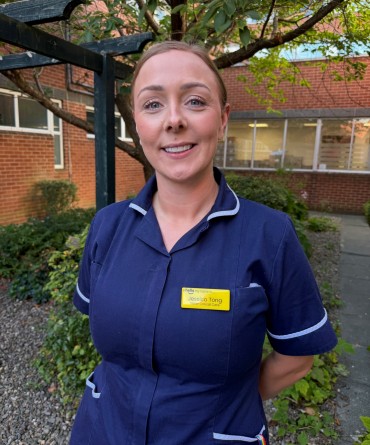
Say hello to Jessica Tong, Sister in York Hospital’s Critical Care Department.
I work both clinically and managerially in York’s Critical Care Department, so my role varies greatly. Clinically, I help run the department alongside a very varied team, supporting nursing and medical handovers, ward rounds, patient flow, admissions and step-downs, as well as providing hands-on patient care when needed.
Alongside my clinical role, I oversee a team of around 25 nurses and Allied Health Professionals. My responsibilities include the day-to-day management of shifts and absences, completing appraisals and regular supervisions, and supporting my team with their aspirations, goal setting, health and wellbeing.
A big part of my role, and how I make a difference day to day, is being present. I work with a large volume of staff from a wide variety of specialities, and each of them requires something different from me. Being present makes a huge difference to how my colleagues feel about their interactions with me — they feel listened to, understood and valued. I want my colleagues to know they can come to me and ask me anything, and if I don't know the answer, I will find out or we can work it out together. This approach also extends to caring for our patients and their families and friends.
I have worked for the Trust since September 2016, which sounds like a long time, but it has honestly flown! I have worked in some sort of caring/healthcare role for most of my life, starting in the NHS as a healthcare assistant.
I completed my nursing degree in 2016 and have worked in my current department as a Registered Nurse, Deputy Sister and Sister. I have taken a couple of detours along the way, working in another critical care unit and for NHS Blood and Transplant for 12 months during the second wave of the pandemic.
I have had many successes and achievements throughout my career; however, the most special moments I have at work are all related to Team ICU. I get the most job satisfaction when I observe my team in action, working together cohesively to care for patients and their families, learning a new skill and becoming competent and autonomous in their role – nothing compares to that sense of accomplishment on their faces! I love observing staff stepping up and leading their colleagues, moving through the job from novice to expert. I have never known another team that will hold each other up like our team do when the job is difficult. The empathy, understanding, kindness and care they have for each other is humbling. They are a truly great team.
We have all been new to a job or role; give yourself time to settle in, and engage with your preceptorship/study days, as these will help you find your feet.
Ask questions! If you are unsure about something, someone will be able to help you find your way. We are all here for a collective purpose to help and care for others in need and learning from each other helps us be great at our role for both us and the people we care for in our roles.
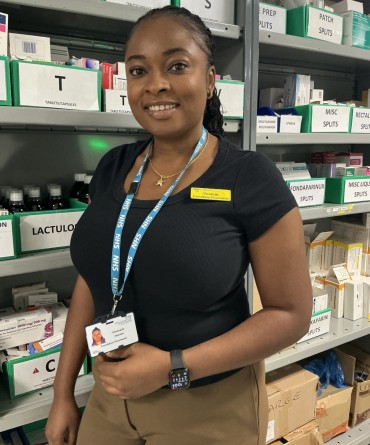
Say hello to Yvonne Okereke, Rotational Pharmacist
Being a rotational pharmacist means that I moved through a number of specialities. I have the opportunity to work in many different areas of the hospital, such as surgery and mental health, supporting patients and wider multidisciplinary teams to ensure medicines are used safely and effectively. A big part of my role involves speaking with patients about their medicines, reviewing prescriptions, and working with nurses, doctors and other healthcare professionals to achieve positive outcomes for each patient.
I joined the Trust in September 2024. One of the things I value most is the opportunity to develop. Moving through different rotations has challenged me, but it has also allowed me to discover areas of pharmacy that I might not otherwise have experienced.
I also really value the people I work with. Pharmacy is a team profession, and throughout my time at the Trust, I have worked with colleagues who have been willing to teach, support, and encourage me.
I don't think I could choose just one person. I have been fortunate to work with pharmacists and colleagues who have influenced different parts of my development.
I particularly admire colleagues who are extremely knowledgeable but still approachable and willing to teach others. Seeing people lead with kindness, remain calm in difficult situations and make time to support junior colleagues has shaped the kind of pharmacist and leader I want to become.
Being elected is an incredible privilege, especially knowing I am part of an organisation with such a long history of championing women in our profession.
Throughout my professional journey, I have benefited enormously from women and colleagues who have encouraged me, opened doors and helped me recognise what I could contribute. That makes this role especially meaningful to me. I want other women, particularly those early in their careers or who may not naturally see themselves represented in leadership, to know there is space for their voices and ideas.
During my presidency, I want to build on the work of those who have led the NAWP before me by creating opportunities for women to connect across different stages and sectors of pharmacy. I hope to encourage mentorship and professional development and ensure we continue meaningful conversations about the barriers women may experience in their careers. Most importantly, I want women to feel confident enough to step forward, take opportunities and recognise that leadership does not have to look just one way.
Be curious and ask questions. Some of my biggest learning opportunities have come from asking a question, looking a little deeper or speaking to someone with more experience. I would also say, get involved beyond the immediate boundaries of your role when opportunities arise. Whether that is teaching, joining a project, representing colleagues or simply volunteering to help, those experiences can help you discover strengths and interests you didn't know you had.
Finally, be kind and considerate to the people around you, as healthcare can be demanding, and supportive colleagues make an enormous difference.
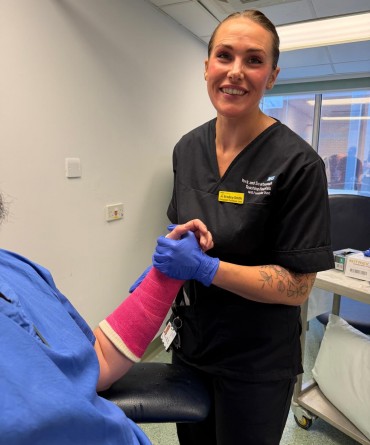
Say hello to Jo Bradley-Smith, Orthopaedic Practitioner Lead.
I am the manager of the Plaster Service across the Trust. We have teams in York, Scarborough and Bridlington hospitals, and I am responsible for nine staff across these sites, ensuring the safe delivery of all treatments.
My working day usually involves using plaster casts and splints to treat patients with traumatic injuries such as broken bones and soft tissue injuries. I look after patients who need post-operative care and wound management following fixation of fractures, and I also provide patients with the information they need to help with their recovery.
We work closely with the Podiatry Team to help patients with foot conditions, as well as the Child Development Team for congenital foot conditions.
Aside from my role at the Trust, I volunteer with Mercy Ships, visiting countries across the world to help children with bone disorders such as rickets and blounts. I spent all of June in Madagascar!
I also examine nationally for casting exams, helping to educate the next generation of orthopaedic professionals.
I have been at the Trust for 14 years now. I was originally a healthcare assistant, and I’ve built my knowledge and expertise to become a Band 7 orthopaedic lead. I wasn’t aiming for a role in orthopaedics, but I’ve loved it ever since I joined the department. All the team are very enthusiastic, and I feel very lucky and proud to work with them, despite the fact many people don’t know we exist until they come and see us!
There have been so many in my line of work. I think, overall, every patient who we treat is on a rehabilitation journey, and I enjoy being able to help them get back to their normal life after a trauma or painful condition.
Be interested in the conditions your patients have so that you can really help them with the education they need to keep them independent. Also, if you invest in your own learning, your career can take you anywhere.
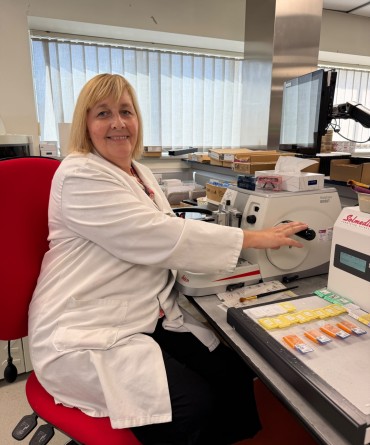
Say hello to Natalie Nequest, Associate Practitioner in the Cellular Pathology Department.
My role is to perform a limited range of complex tasks. This includes assisting with dissecting and preparing a patient's tissue for processing. Once it is processed, I then use a microtome to create thin slices of samples called sections, so they are ready to go onto diagnostic slides and be examined by a pathologist under a microscope.
Other areas covered include non-gynae (preparing samples of fresh and fixed fluid and clots for diagnosis), special stains (dyeing slides to show tissue architecture and/or organisms), and immunocytochemistry (using antigen-antibody interaction to give us in-depth knowledge of tissue to assist with classification of tumours and determine a more specific treatment approach).
My job also includes providing support in other areas, such as health and safety, receiving specimens in the specimen reception, and answering the phone for stock orders or theatre colleagues advising about a patient's specimen.
Another part of my job which I enjoy is training new colleagues in various areas, as I have years of experience in my role and my ability to pass on my skills and knowledge to the new staff is valued. While my role covers lots of different areas, the important aspects, such as teamwork, problem-solving, training and development, good working practices, and quality, run through all of them.
I have worked at the Trust for 25 years. I started in the Neuropathology Department as a Medical Lab Assistant. I progressed to a Band 2 with extra responsibilities and wanted to progress further. The option to complete an NVQ Level 3 in-house was suggested to me, and I was the first person to do so and learn hands-on at the same time. As my children got older, I successfully applied for a Band 4 post and have been in that position ever since.
I like working for the Trust because my work family is amazingly caring and patient-focused, which is what has kept me working here for so long. I love my job even with all the challenges we face. It is always a learning day. I enjoy working with and training people who have the same focus as me, which is to do a good job and do it right the first time.
During my long years of service, it’s always been special when I have received acknowledgement from my colleagues for my hard work and for going the extra mile. It’s also been wonderful when I have had the opportunity to celebrate my friends getting new jobs or star awards or when they have retired.
This was one of the easiest questions to answer. There are too many to mention by name in case I forget anyone. The team I work with are all my role models. We support each other and learn from each other and are very patient-focused
I would say to anyone wanting to join the Trust, you need to be patient-focused, not afraid of hard work, have a caring nature, be considerate, have a passion for the job and be a team player. If you do all this, you will have as fulfilling a career in the NHS as I have.
Say hello to Shannon McGovern, Clinical Digital Change Lead for Child Health.
I feel incredibly fortunate to be a senior Children's Nurse within the Trust and to have the opportunity to champion and advocate for children, young people and their families.
As Clinical Digital Change Lead, I am part of the Clinical Digital Team within the wider Y&S Digital Team. This is a new and exciting role that enables clinical expertise to be embedded within digital transformation programmes across the Trust. My role is to bridge the gap between clinical practice and digital technology, ensuring that our digital systems are designed with the needs of frontline staff and patients at their heart.
I am particularly passionate about ensuring paediatric services are represented within digital transformation programmes, so that the unique needs of children and young people are reflected in the systems we develop and implement. For paediatric services, this is an exciting step forward. By ensuring strong paediatric representation within the digital team, we are helping to align our services with the wider Trust while delivering digital solutions that enhance patient safety, improve staff experience and ultimately provide better care for children and their families.
I qualified as a Registered Children's Nurse in 2011 and, after spending the early part of my career working in paediatric services at Addenbrooke's and Leeds Children's Hospital, I joined the Trust in 2015 to pursue a career in nurse education as the Clinical Educator for Paediatrics. More recently, I have taken on the role of Clinical Digital Change Lead, supporting the digital transformation of paediatric services.
Over the past 10 years at the Trust, I have had the privilege of working alongside some truly incredible colleagues and have made lifelong friendships. What I value most about working here is the shared commitment of our teams to championing and advocating for children, young people, and their families. Everyone works with the same purpose: to provide the highest quality care and continually improve the services we deliver. The Trust has also provided me with opportunities to grow professionally, develop new skills, and contribute to exciting transformation projects.
Over my 10 years at the Trust, I have been fortunate to be involved in many exciting and rewarding transformation projects that have had a positive impact on patients, their families, and our staff.
One of the most special moments in my career was being part of the implementation of the new Nervecentre electronic patient record (EPR) across the Trust. This was one of the biggest transformations paediatric services have undertaken and introduced a wide range of digital improvements. It was a privilege to work collaboratively across multiple teams to bring this transformation to fruition. Seeing months of planning, engagement and hard work translate into a successful implementation was incredibly rewarding. Being part of such a significant change reinforced the importance of teamwork, collaboration and innovation, and it is a moment I am particularly proud to have been involved in during my career.
I would encourage anyone to pursue a career in children’s nursing because it is one of the most rewarding professions. Children's nurses have the privilege of caring for children and young people as some the most vulnerable times in their lives, while also supporting their families through often challenging experiences.
No two days are the same. The role is incredibly varied, offering opportunities to work across a range of specialists and teams, develop new skills, and continually learn and develop. It is a career that combines clinical expertise with compassion, communication and advocacy, ensuring that every child receives safe, high-quality, family-centred care. What makes children's nursing particularly special is the difference you can make.
Whether it's helping a child recover from illness, providing reassurance to anxious parents, or simply bringing a smile during a difficult hospital stay, even the smallest actions can have a lasting impact. I feel incredibly proud to be part of a profession that makes such a positive difference to the lives of children, young people and their families every day.
Say hello to David Humphriss, Consultant Endocrinologist in Scarborough and Chairman of Trustees for Hospital Arts for North-East Yorkshire.
I’m a Consultant Physician in General Medicine, Diabetes and Endocrinology. Alongside my colleagues, I support the medical on-call rota, care for medical inpatients, and run specialist outpatient clinics for people with diabetes and other endocrine conditions. We also work closely with our specialist diabetes nursing team to provide expert inpatient care.
Alongside clinical work, I contribute to a number of additional roles - serving on committees, acting as an appraiser, and providing educational supervision for resident doctors in training. I’m also Course Director for the Scarborough Advanced Trauma Life Support (ATLS) course and a staff-side member of the BMA Local Negotiating Committee.
I qualified in Medicine in Liverpool in 1985, and this year marks my 40th year working in the NHS. I came to Scarborough as a consultant in 1996, so in April 2026 I’ll be celebrating 30 years here. When I first arrived, the Scarborough North East Yorkshire Healthcare Trust was still very new, and the merger with York didn’t take place until 2012. Scarborough is an incredibly friendly place, and the hospital has always worked hard to provide good healthcare for our local community - and for the many visitors who come to the area each year.
There are lots of ways I could answer this. Professionally, when I arrived in 1996 the diabetes team was involved in the UK Prospective Diabetes Study (UKPDS), which went on to shape how Type 2 Diabetes is managed worldwide. A few years later, Scarborough became one of the founding members of the DAFNE collaborative, adapting a successful German education programme that now underpins modern Type 1 Diabetes care, particularly around matching insulin to food.
On a personal level, I’ve been very happy living in rural North Yorkshire. Scarborough is where I met my wife, got married and raised our two children, who are now grown up. Alongside my clinical work, I’ve also enjoyed contributing to the wider hospital community, including founding the Hospital Art Project, HAFNEY (Hospital Arts for North East Yorkshire), to help make our spaces more welcoming for everyone.
HAFNEY is a registered charity, guided by trustees from the local arts community, hospital staff and patients. The idea goes back to my time as a medical student at the newly built Royal Liverpool Hospital. A consultant surgeon there, John McFarland, had a real passion for the arts and strong links with the Liverpool Arts School. His training years overlapped with people like John Lennon, Stuart Sutcliffe and the Liverpool Poets, and when the Royal Liverpool was built with long, bare corridors, he drew on those contacts to fill the space with murals and artwork - something that really stayed with me. I later trained in Newcastle, where art was visible, but when I arrived in Scarborough there was very little. I’d also become interested in evidence-based hospital design, and there’s now good evidence that thoughtful design and engaging art can aid recovery.
When I was co-opted onto the liaison group for the Holly, Ash and Willow wards, I asked whether the new build would align with the Trust’s art strategy - knowing there wasn’t one. The architects confidently said it would, because design and art mattered. That conversation prompted me to set up a hospital arts group and, in 2002, register HAFNEY as a charity.
Before the Trust merger, York Hospital was also exploring an arts project, and HAFNEY was able to share advice and support. From the outset, I knew no artwork would be universally liked - but that isn’t the point. Art sparks conversation - brings the outside world into the hospital and helps make our spaces feel more human.
Over the years, we’ve built a varied collection of paintings, ceramics, photography, glass and sculpture, alongside artist residencies where people worked with staff and local schools to create pieces for particular areas. Scarborough Hospital welcomes more visitors each year than many regional galleries, which helped us secure early external funding and develop a collection featuring both local and national artists.
The trustees still support the Trust’s Art Coordinator, and the project’s impact was recently recognised when York hosted the annual National Arts in Hospitals Network conference. Looking ahead, we’d love to welcome one or two younger staff or arts community members to help carry HAFNEY forward - and I’d be delighted to hear from anyone interested.
My grandfather used to say, “look after yourself because nobody else will.” I’m not sure that’s entirely true, but I do think a sensible work-life balance matters, or you’ll burn out. One question I’ve found really helpful is: “What do we normally do in these circumstances?” The Trust is full of knowledgeable people, and if you don’t know the answer, someone nearby will. Know your limits - and if in doubt, ask.
Say hello to Jamie Baxter, Programme Manager
I am a programme manager working in the Programme Management Office based at York Hospital. I work on priority programmes that support our Trust strategy so they are focused on specific outputs and therefore are generally for set periods of time.
I have been at the Trust for nearly three years and I came here straight from the Army. My last military job was in York and my family really loved being here so we decided to settle down and make this the last (for now!) of 15 moves that we have had. The great thing about my work is the variety of projects and programmes which is giving me a real insight into the workings of the Trust, from Board level all the way to operational delivery.
I have been involved in a number of capital projects in my time here and they are often complex and can be frustrating in some ways. What makes all of that worthwhile is taking clinical and operational staff to show them a new facility and feeling the excitement when they see a brand new, modern and well-equipped environment. We know that we are making a difference to people's working lives by providing a suitable working environment and that will translate into better patient care.
When I was transitioning from the Army to civilian life and deciding on my career options, it was clear to me that I needed something with a moral purpose. This organisation gives me that and the work that we do is a real inspiration. When you talk to colleagues - domestic, operational and clinical - who are dedicated to providing the best service that they can, it is a real motivation and the best type of role modelling. I would not say I had a specific role model, but the NHS and this Trust and its people make coming to work easier and are a real incentive to do the best work for colleagues and patients.
Ex-Military staff bring a huge amount to the Trust and are hugely valued so I want to raise their profile and allow them the recognition but also - while working for the Trust is really satisfying - there are aspects of military life that many veterans miss, so I want to provide some of that through the Network. Armed Forces Day is a key date in the national calendar and allows to celebrate the great work that the Armed Services do, and recognise the contribution that veterans have made and continue to make, especially in the NHS.
Say hello to Jenny Hammond, Catering Retail Supervisor.
I am based in Ellerby’s, which is the restaurant and coffee shop at York Hospital. It’s open to patients, colleagues, and hospital visitors, so as you can imagine, it’s a busy place to work. As a supervisor, I’m there to ensure the smooth running of the service for all our customers. We open at 7am, so I go around with a checklist to make sure we are ready for the breakfast rush, then again for lunch. I support my colleagues while it’s busy, and I’m always happy to jump on a till to keep the queues moving. As a supervisor, you have to have eyes everywhere and ensure the shift goes smoothly.
I joined in June 2017, and my background is in hotel and retail catering. I love seeing our customers happy, and I do try to make Ellerby’s a happy place to work for my colleagues. Great customer service is a passion of mine, and it’s really rewarding when I can see everything running smoothly, and Ellerby’s is full of people enjoying their meals.
I recently received a colleague commendation, and the citation reads: “I put in a late minute request for catering from Ellerby's for a retirement party, and had a couple of things to check. Jenny was very helpful and on hand if I had a query. I can't thank her enough for her help and advice on the catering. Everything ran smoothly and everyone had a great time at the party. Thank you so much again for all your help, Jenny.”
Today is also National Healthcare Estates and Facilities Day, when we celebrate the contribution that estates and facilities teams all across the country make to their organisations. So, it’s always really lovely to realise how much your efforts are appreciated by the people you help.
My current manager, Marta Kupinska, who always helps me to go above and beyond. She takes the time to offer support when I need it, and she shares her wisdom with me! I also very much miss Liz Higginson, a former colleague, who was able to get the best out of me and show me how I could improve the way I do my job.
Knowing that all the hard work that goes on behind the scenes has paid off gives me a great deal of job satisfaction. Everyone in the team works hard to make sure that the restaurant is clean and tidy for service, and, as a supervisor, it’s my responsibility to make sure we always comply with environmental health standards.
Getting here
Providing care together in York, Scarborough, Bridlington, Malton, Whitby, Selby and Easingwold communities
© 2026 York and Scarborough Teaching Hospitals NHS Foundation Trust | Accessibility | Site map | Cookies policy
York and Scarborough Teaching Hospitals NHS Foundation Trust is registered, and therefore licensed to provide services, by the Care Quality Commission (Provider ID: 1-114394658). For more information, visit www.cqc.org.uk